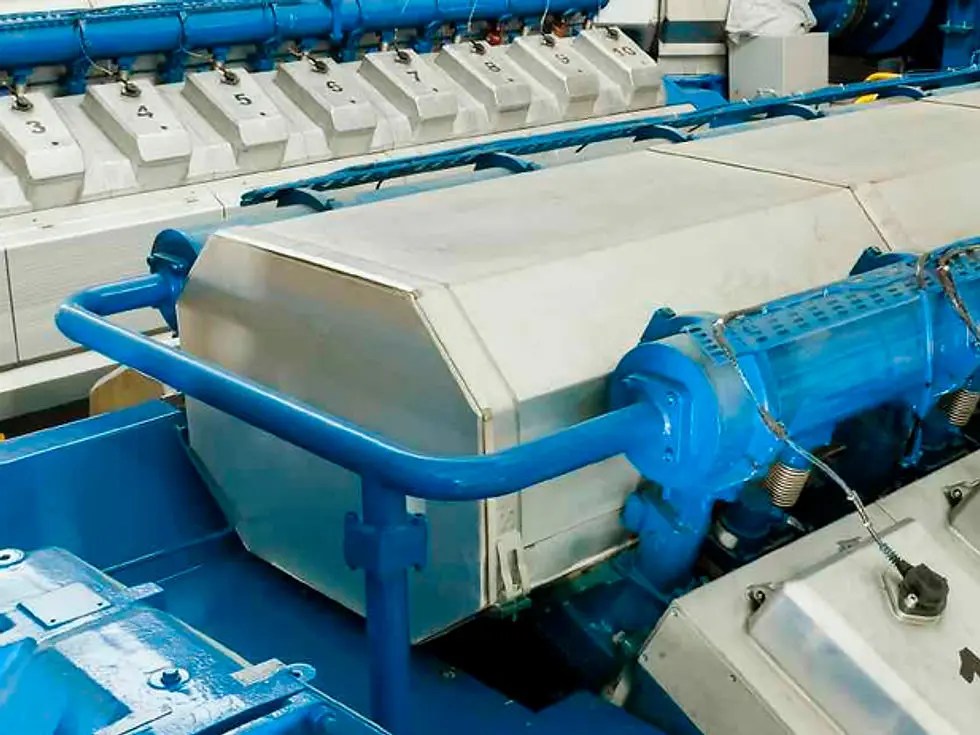
When faced with an industrial noise problem, engineers and plant managers frequently ask a straightforward question: should we install an acoustic enclosure or a noise barrier? Both are proven noise control solutions, but they work on fundamentally different principles and are suited to different applications. Choosing incorrectly can result in wasted investment, insufficient noise reduction, or operational problems that lead to the treatment being removed or bypassed. This article provides a clear comparison of acoustic enclosures and noise barriers, along with a practical decision framework to help you select the right solution.
How Each Solution Works
Acoustic Enclosures
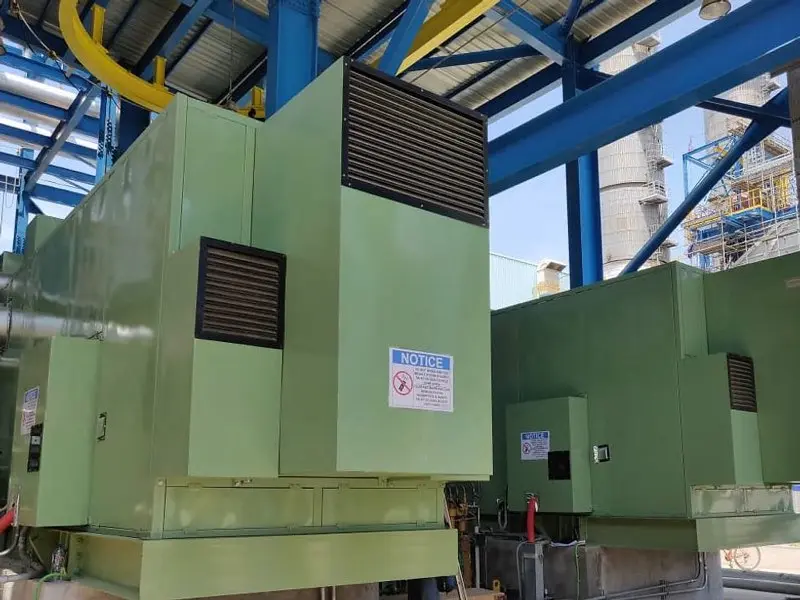
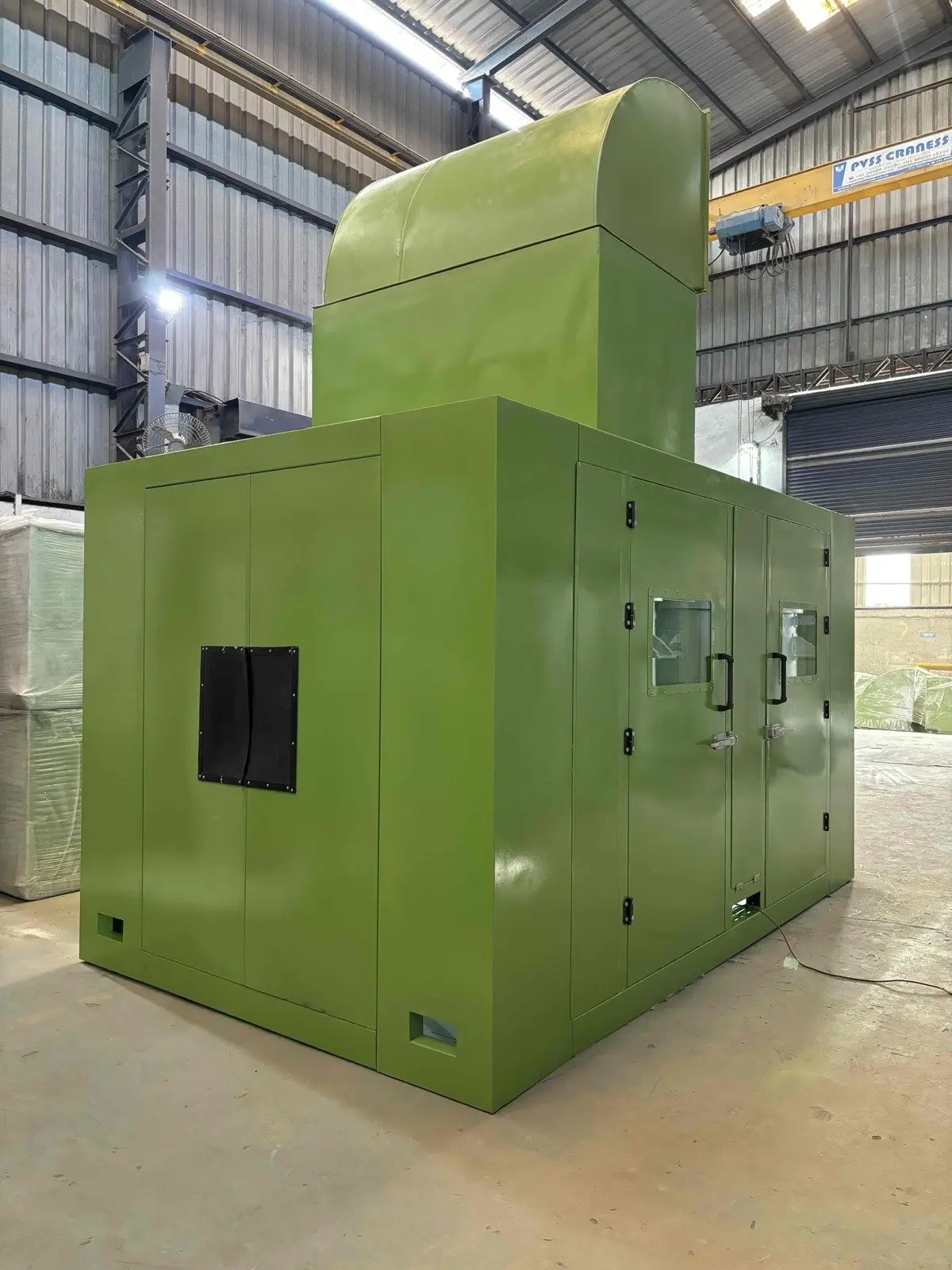
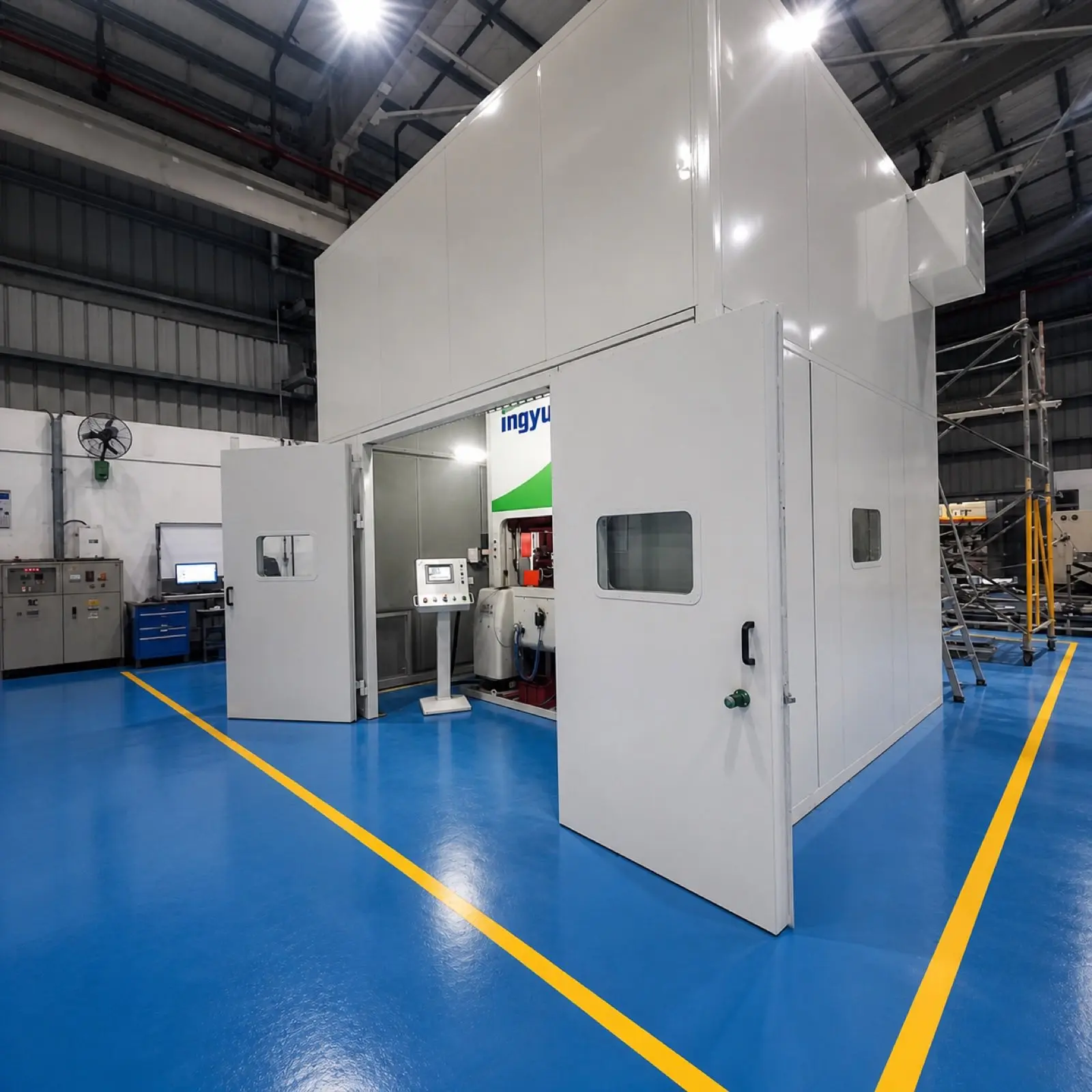
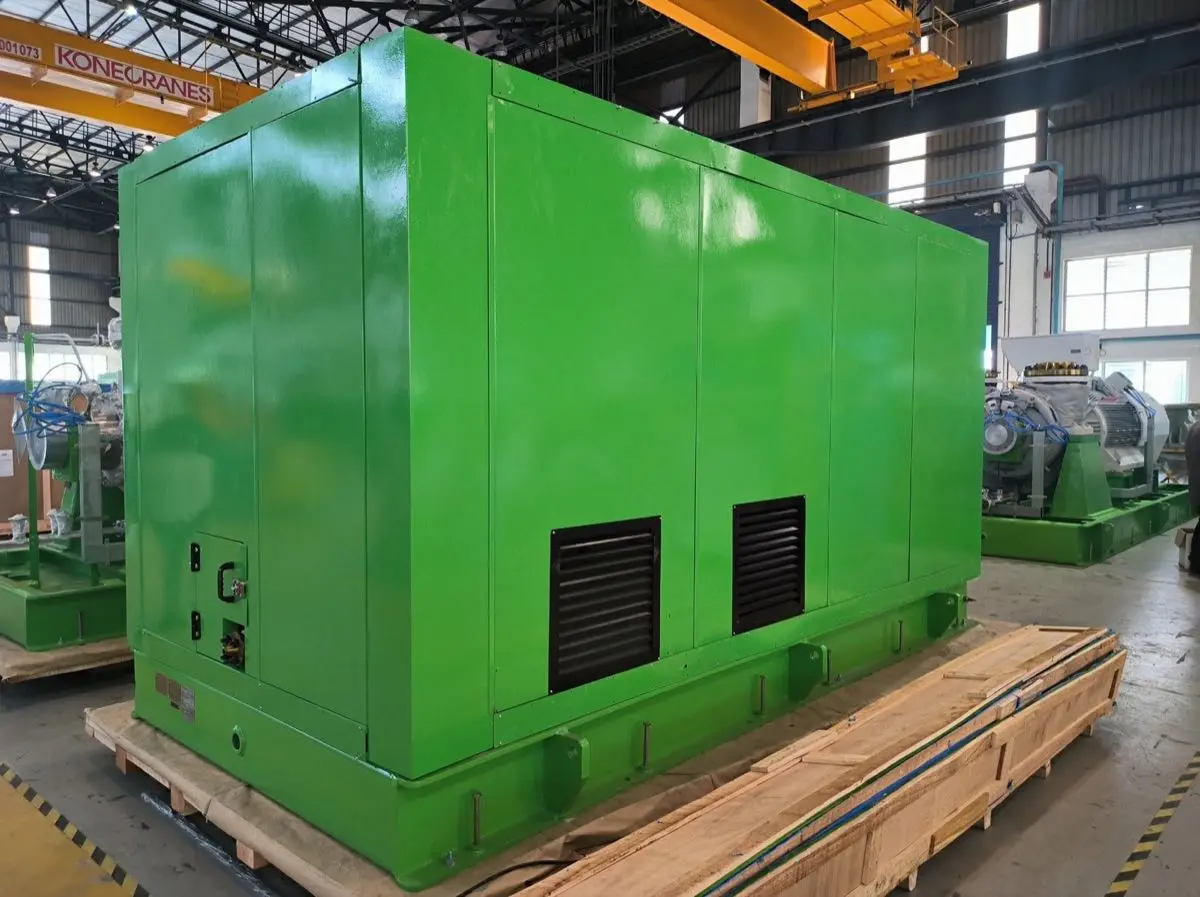
An acoustic enclosure completely surrounds the noise source with acoustically rated panels. Sound energy must pass through the panel construction to reach the outside, and the transmission loss of the panels determines the noise reduction. A well-designed acoustic enclosure provides noise reduction of 20 to 40 dB(A), depending on panel construction, sealing quality, and the treatment of necessary openings (ventilation, access, piping penetrations).
The noise reduction is omnidirectional — the enclosure reduces noise equally in all directions around the source. This makes enclosures the solution of choice when noise must be reduced in all directions, including directly above and below the source.
Noise Barriers
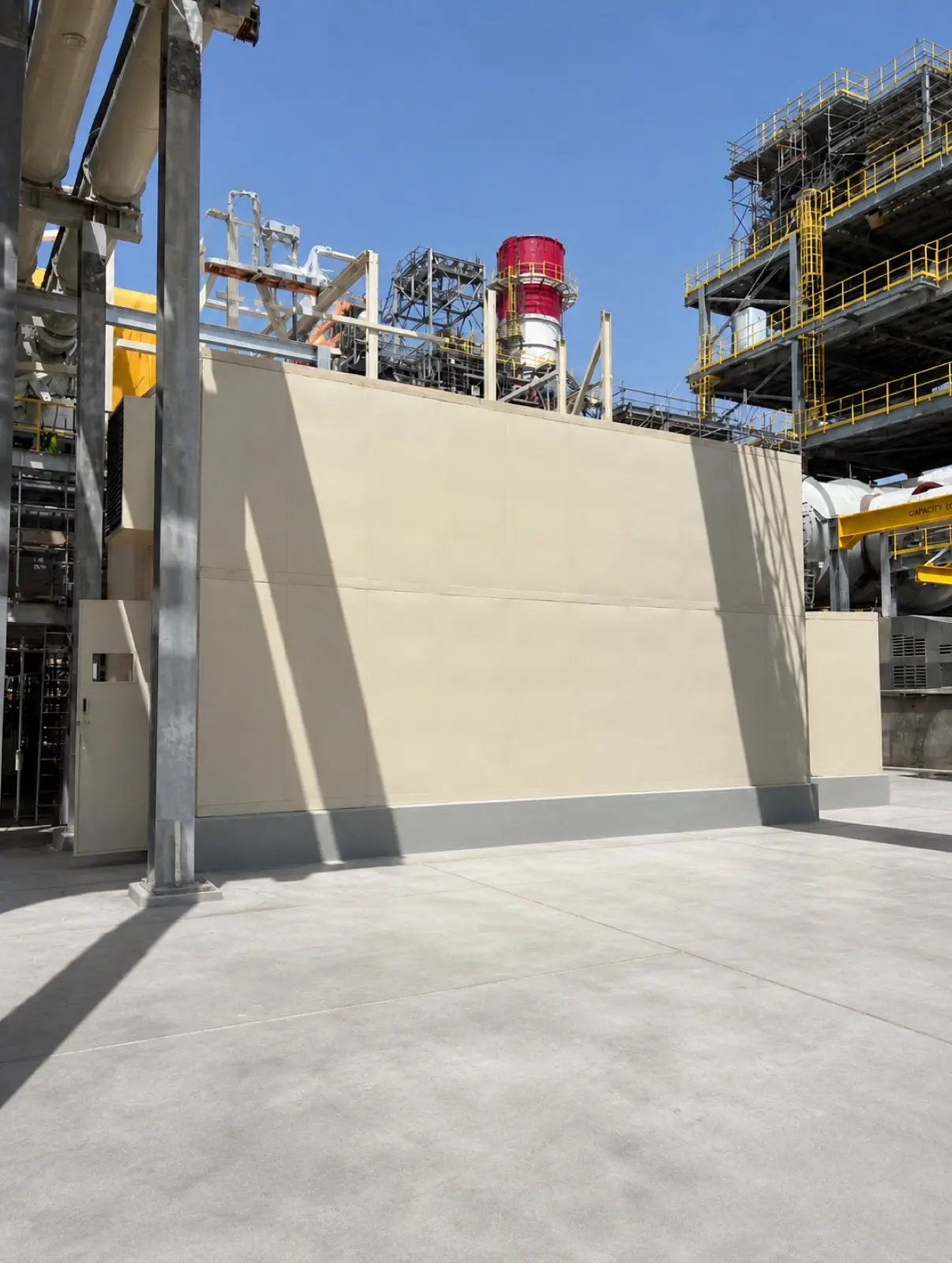
A noise barrier is a solid wall or screen placed between the noise source and the receiver. The barrier works by blocking the direct line of sight between source and receiver, forcing sound to diffract over or around the barrier. The noise reduction depends on the path length difference — the additional distance the sound must travel over the barrier compared to the direct path — and is typically 5 to 15 dB(A) for practical industrial barriers.
Barriers reduce noise only on the shielded side. The noise level on the source side is actually increased slightly due to reflections from the barrier surface (unless the barrier is lined with absorptive material on the source side). Barriers are inherently directional solutions.
Detailed Comparison
Noise Reduction Performance
Acoustic enclosures provide 20 to 40 dB(A) reduction and perform consistently across all frequencies when properly designed with appropriate panel mass and absorptive infill. The reduction is limited primarily by the weakest path — typically ventilation openings or poorly sealed access doors.
Noise barriers provide 5 to 15 dB(A) reduction in the shadow zone behind the barrier. Performance depends heavily on geometry: the barrier must be significantly taller and wider than the direct source-to-receiver sight line, and the source and receiver should be close to the ground relative to the barrier height. Low-frequency noise diffracts easily over barriers, limiting low-frequency performance. For a barrier to provide 10 dB(A) reduction, the path length difference typically needs to exceed 2.5 meters.
When comparing an acoustic enclosure vs a noise barrier, the enclosure provides substantially higher noise reduction — often 15 to 25 dB(A) more than a barrier for the same noise source.
Cost
Acoustic enclosures have higher per-square-meter material and fabrication costs because they require full panel construction (outer skin, absorptive infill, inner perforated skin), structural framing, doors, ventilation systems, and often lighting and fire detection. A typical industrial enclosure costs 2 to 5 times more than a barrier of equivalent surface area.
Noise barriers are simpler structures — a single-skin or double-skin wall on a supporting frame. Material costs are lower, and construction is faster. For noise control solution comparison purposes, barriers typically cost 20 to 40% of an equivalent-area enclosure.
However, cost should be evaluated on a per-decibel-of-reduction basis, not on a per-square-meter basis. When 20+ dB(A) of reduction is needed, only an enclosure can achieve it — a barrier cannot, regardless of cost.
Maintenance Access
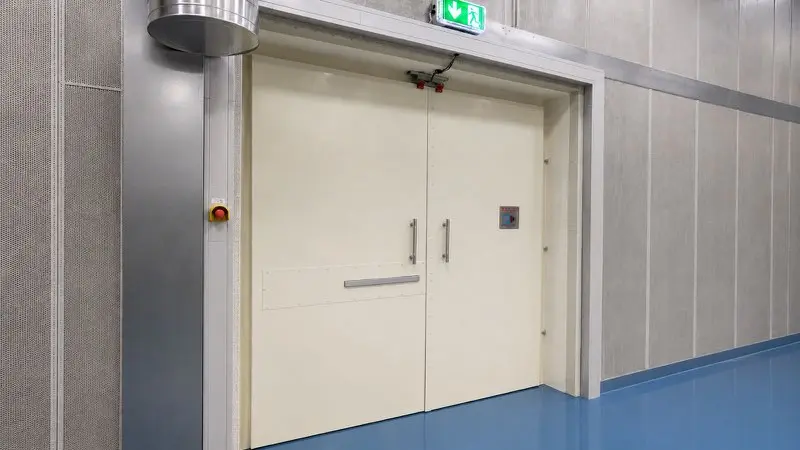
Acoustic enclosures inherently restrict access to the enclosed equipment. Well-designed enclosures mitigate this with large doors, removable panels, and service openings, but some access restriction is unavoidable. Equipment that requires very frequent access (multiple times per day) may not be suitable for enclosure treatment.
Noise barriers do not restrict access at all — the equipment remains fully accessible from the non-barrier side and from above. This is a significant advantage when to use a noise barrier becomes the question — if maintenance access is critical, a barrier preserves it completely.
Ventilation
Acoustic enclosures must incorporate ventilation for most industrial equipment, adding cost and complexity. The ventilation system (silenced intake and exhaust openings, and often forced-draft fans) must be designed to match the equipment's heat dissipation while maintaining acoustic performance. Ventilation is often the largest single cost element in an enclosure design.
Noise barriers have no ventilation requirements because the equipment is not enclosed. Air circulates freely around the equipment, and there is no risk of overheating. This makes barriers particularly attractive for equipment with high heat dissipation or explosion risk.
Space Requirements
Acoustic enclosures require clearance around all sides of the equipment — typically 600 to 1000 mm minimum for maintenance access, and more if doors must open outward. The total footprint of an enclosed machine can be 2 to 3 times the machine footprint alone.
Noise barriers are compact — a barrier wall typically requires only 200 to 300 mm of floor space at its base. Barriers can be placed close to the property boundary or between adjacent machines without significant space consumption.
Weather and Environment
Acoustic enclosures provide weather protection for the enclosed equipment, which can be beneficial for outdoor installations. They also contain any leaks, spills, or emissions from the equipment.
Noise barriers provide no weather protection and do not contain leaks or emissions. However, they are not affected by equipment corrosion or chemical exposure on the non-barrier side.
Decision Framework
The following decision matrix helps determine when to use each solution:
Choose an Acoustic Enclosure When:
- Noise reduction of more than 15 dB(A) is required
- Noise must be reduced in all directions (e.g., equipment surrounded by worker positions or residential areas on multiple sides)
- The noise source is compact (single machine or a small group of machines)
- Weather protection for the equipment is desirable
- Regulatory compliance requires specific guaranteed noise levels at nearby receivers
- Equipment can tolerate the access and ventilation constraints of an enclosure
Choose a Noise Barrier When:
- Noise reduction of 5 to 12 dB(A) is sufficient
- Noise needs to be reduced only in a specific direction (e.g., toward the plant boundary or a specific building)
- The noise source is large or distributed (e.g., a cooling tower bank, a pipe rack, an entire process area)
- Unrestricted equipment access is essential
- The equipment has high heat dissipation or explosion risk that makes enclosure impractical
- Budget is limited and partial noise reduction is acceptable
- Space constraints prevent enclosure construction
Consider a Combination When:
- Some equipment in an area benefits from enclosures while others benefit from barriers
- An enclosure provides the primary noise reduction, with a barrier addressing flanking paths or secondary sources
- A partial enclosure (three-sided with a roof) provides most of the enclosure benefit with easier access — this is essentially a hybrid between an enclosure and a barrier
Common Mistakes in Noise Control Solution Selection
Overestimating barrier performance: We frequently encounter specifications calling for 20 dB(A) barrier performance, which is physically unachievable with a practical barrier. If your noise target requires more than 12-15 dB(A) reduction, a barrier alone will not suffice.
Underestimating enclosure ventilation costs: The ventilation system for a high-heat-dissipation machine (generator, large compressor) can cost as much as the enclosure panels themselves. Always include ventilation in the enclosure cost estimate.
Ignoring flanking paths: A noise barrier is ineffective if sound can reach the receiver via paths that do not pass through the barrier — reflections from adjacent buildings, diffraction around the barrier ends, or transmission through the ground. A site-specific acoustic analysis is essential for barrier design.
Ignoring operational behavior: An acoustic enclosure with doors that are habitually left open provides no noise reduction. Design for operational reality — provide adequate access, ventilation, and lighting so that operators have no reason to defeat the enclosure's acoustic integrity.
Conclusion
The choice between an acoustic enclosure and a noise barrier is not arbitrary — it is determined by the required noise reduction, the directional characteristic of the noise problem, equipment access and ventilation needs, available space, and budget. Both solutions are effective when correctly applied, but neither can substitute for the other in applications where the other is required.
At ARK Noise Control, we design and manufacture both acoustic enclosures and noise barriers, and we frequently deploy both on the same project. Our acoustic engineers will assess your specific situation and recommend the solution — or combination of solutions — that achieves your noise targets reliably and cost-effectively.