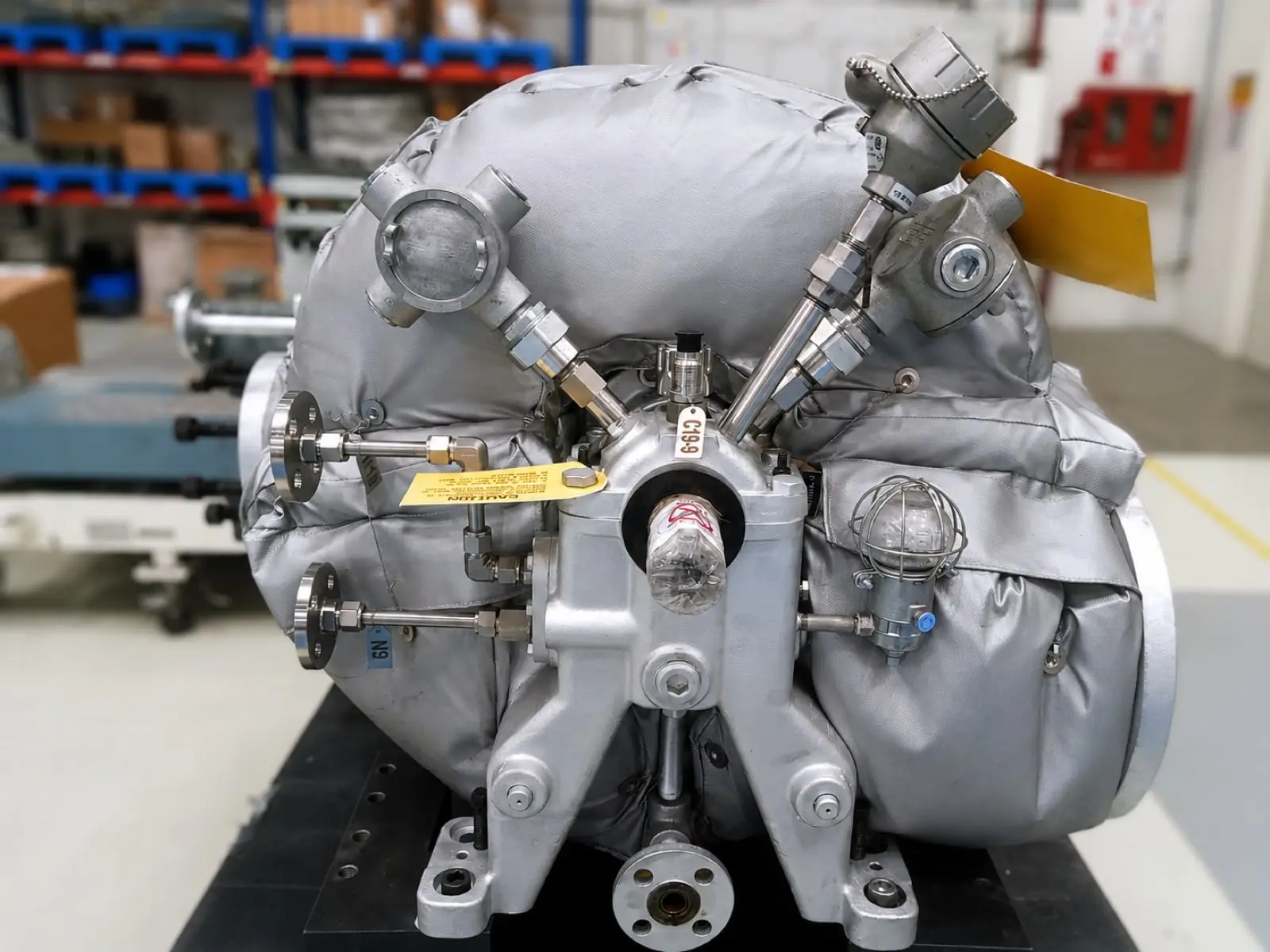
The decision between removable insulation blankets and permanent lagging is one of the most consequential choices in industrial noise and thermal management. While both solutions use similar acoustic and thermal principles, they differ fundamentally in how they integrate with plant maintenance operations, and this difference drives a dramatic divergence in total lifecycle cost. This article provides a rigorous cost-benefit analysis to help plant engineers, maintenance managers, and procurement teams make an informed decision.
Defining the Options
Removable Insulation Blankets
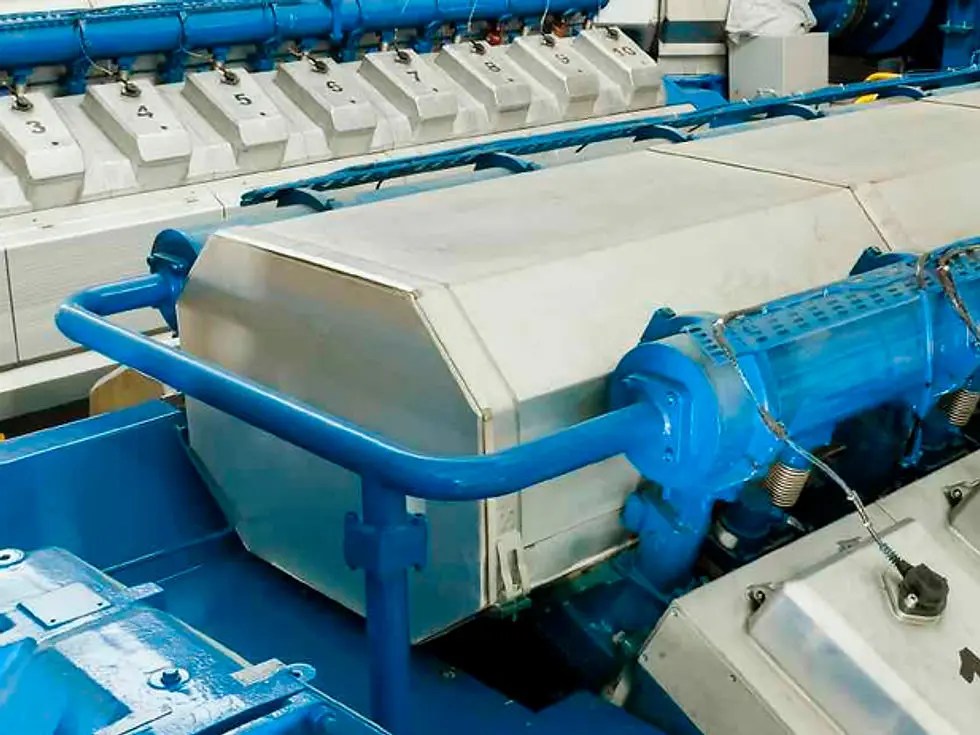
Removable insulation blankets — also known as removable noise blankets, acoustic jackets, or by trade names such as ARK's NoiseLAG system — are custom-fabricated insulation pads designed to fit specific equipment geometry. Each blanket consists of:
- An outer cover of silicone-coated fiberglass, PTFE-coated fiberglass, or other durable weather-resistant fabric
- Acoustic or thermal infill material (mineral wool, ceramic fiber, aerogel, or multi-layer acoustic composites)
- An optional mass barrier layer (for acoustic applications)
- Quick-release fastening systems (Velcro, D-rings, lacing hooks, toggle latches, or snap buckles) that allow tool-free removal and reinstallation
Blankets are manufactured in a controlled factory environment based on site measurements, 3D scans, or equipment drawings. Installation and removal require no special tools or skills and can be performed by maintenance personnel in minutes.
Permanent Lagging
Permanent lagging (also called conventional cladding or hard lagging) consists of insulation material (typically mineral wool or calcium silicate) applied directly to the equipment surface, covered by a mass barrier (for acoustic applications), and finished with a metal jacket (aluminium or stainless steel sheet) secured with banding, screws, or pop rivets.
Permanent lagging is installed on-site by specialist insulation contractors and is intended to remain in place for the life of the equipment. Removing permanent lagging requires cutting, dismantling, and discarding the material — it cannot be reused.
Performance Comparison
Acoustic Performance
Both solutions achieve comparable acoustic performance when properly designed:
| Parameter | Removable Blankets | Permanent Lagging | |---|---|---| | Typical noise reduction | 8-15 dB(A) | 8-15 dB(A) | | Frequency range | Effective above 250 Hz | Effective above 250 Hz | | Performance over time | Maintained (blankets reinstalled intact) | Degrades (damage during maintenance, poor reinstallation) | | Coverage quality | Excellent (custom-fitted) | Variable (depends on installer skill) | | Seam performance | Consistent (engineered overlap) | Variable (gaps develop over time) |
In practice, removable noise blankets frequently outperform permanent lagging in field conditions because they maintain their integrity across maintenance cycles. A permanent lagging installation that looked excellent on day one often has gaps, missing sections, and degraded seals after two to three maintenance events.
Thermal Performance
| Parameter | Removable Blankets | Permanent Lagging | |---|---|---| | Temperature range | -40°C to 1000°C (depending on materials) | -40°C to 1000°C (depending on materials) | | Thermal conductivity | Comparable for equivalent thickness | Comparable for equivalent thickness | | Personnel protection | Reduces surface temperature to safe touch levels | Reduces surface temperature to safe touch levels | | Energy savings | Equivalent for equivalent R-value | Equivalent for equivalent R-value |
For removable thermal insulation applications, the thermal performance is functionally identical to permanent lagging for the same insulation material and thickness. The fabric cover of a removable blanket adds negligible thermal resistance.
Cost Analysis: Initial vs Lifecycle
Initial Installation Cost
For the same scope (e.g., insulating 50 valves, 30 flanges, and 200 meters of piping in a process unit), typical comparative costs are:
| Cost Component | Removable Blankets | Permanent Lagging | |---|---|---| | Material cost | Higher (custom fabrication, fabric, fasteners) | Lower (commodity insulation materials) | | Labor cost | Lower (unskilled installation, minutes per item) | Higher (skilled contractors, hours per item) | | Engineering cost | Higher (individual blanket design and patterning) | Lower (standard details) | | Total initial cost | Index: 120-140 | Index: 100 |
Removable insulation blankets typically cost 20-40% more than permanent lagging for initial installation. This premium is the primary reason permanent lagging continues to be specified — procurement decisions based solely on initial cost favor permanent lagging.
Maintenance Cost Impact
Here is where the economics reverse dramatically. Industrial equipment — particularly valves, flanges, steam traps, instruments, and heat exchangers — requires regular maintenance. When permanently lagged equipment needs maintenance:
1. An insulation contractor must be mobilized to remove the lagging (scheduled and coordinated with the maintenance window) 2. The lagging is cut away and discarded as waste 3. Maintenance is performed on the now-exposed equipment 4. New lagging must be fabricated and installed — often delayed days or weeks after the maintenance event, leaving the equipment uninsulated
The cost of each maintenance-related lagging removal and replacement cycle includes:
- Insulation contractor mobilization and labor: typically 60-80% of the original lagging installation cost per event
- Material cost for new insulation and cladding: typically 40-60% of original material cost
- Waste disposal costs (mineral wool, metal cladding)
- Equipment downtime extension (waiting for insulation contractor availability)
- Energy loss during the period equipment operates without insulation
For removable blankets, the maintenance cost impact is essentially zero — the blanket is removed by maintenance personnel in minutes, the maintenance is performed, and the blanket is reinstalled immediately. No contractor, no waste, no delay, no energy loss.
Lifecycle Cost Model
Consider a typical scenario: 100 flanged valves in a process unit, each requiring maintenance access once per year, over a 10-year equipment lifecycle.
| Year | Permanent Lagging Cumulative Cost (Index) | Removable Blankets Cumulative Cost (Index) | |---|---|---| | 0 (Installation) | 100 | 130 | | 1 | 160 | 130 | | 2 | 220 | 130 | | 3 | 280 | 130 | | 5 | 400 | 135 (minor repairs) | | 10 | 700 | 145 (minor repairs + some replacements) |
By year 2, the cumulative cost of permanent lagging exceeds the cost of removable blankets. By year 10, permanent lagging costs nearly 5 times more than removable blankets for the same scope. These figures are consistent with lifecycle cost studies published by major EPC firms and blanket manufacturers.
Decision Framework
Choose Removable Insulation Blankets When:
- Equipment requires maintenance access (valves, flanges, instruments, steam traps, turbines, compressors, heat exchangers)
- Multiple maintenance events are expected over the equipment lifecycle
- Minimizing maintenance downtime is important (blanket removal takes minutes vs hours for permanent lagging)
- Total lifecycle cost is the evaluation criterion
- Equipment geometry is complex and benefits from custom-fitted coverage
- The facility has sustainability goals (blankets generate no waste during maintenance)
- Insulation must be frequently added or removed for inspection programs
Choose Permanent Lagging When:
- Equipment will never require maintenance access (long straight pipe runs with no fittings)
- The operating environment would destroy blanket cover materials (extreme abrasion, chemical splash, sustained flame impingement)
- Initial capital cost is the sole decision criterion and lifecycle cost is not considered
- The insulated surface is a simple geometry (flat panels, uniform pipe runs) where permanent lagging is straightforward to apply
- The application is purely thermal (no acoustic requirement) on non-maintained equipment
The NoiseLAG Advantage
ARK Noise Control's NoiseLAG removable acoustic blanket system combines noise reduction and thermal insulation in a single removable jacket, specifically engineered for industrial environments:
- Operating temperature range: -40°C to 1000°C with appropriate material selection
- Acoustic performance: 8-15 dB(A) noise reduction (depending on construction)
- Fastening options: Velcro, D-rings, toggle latches, or snap buckles — selected based on temperature, access frequency, and environmental conditions
- Cover materials: Silicone fiberglass (standard), PTFE fiberglass (chemical resistance), stainless steel mesh (extreme temperatures), aluminized fiberglass (radiant heat environments)
- Service life: 10-15 years with normal handling
- Over 500 installations across refineries, power plants, chemical plants, and manufacturing facilities
Conclusion
The choice between removable insulation blankets and permanent lagging should be driven by lifecycle cost analysis, not initial cost alone. For any equipment that requires maintenance access — which includes the vast majority of industrial equipment — removable blankets deliver superior lifecycle economics, better maintained performance, faster maintenance turnaround, and zero insulation waste. The 20-40% initial cost premium pays for itself within 12-24 months for equipment with annual or more frequent maintenance cycles.
Contact ARK Noise Control to discuss your insulation requirements. Our engineering team will provide a lifecycle cost comparison specific to your application and recommend the optimal solution.