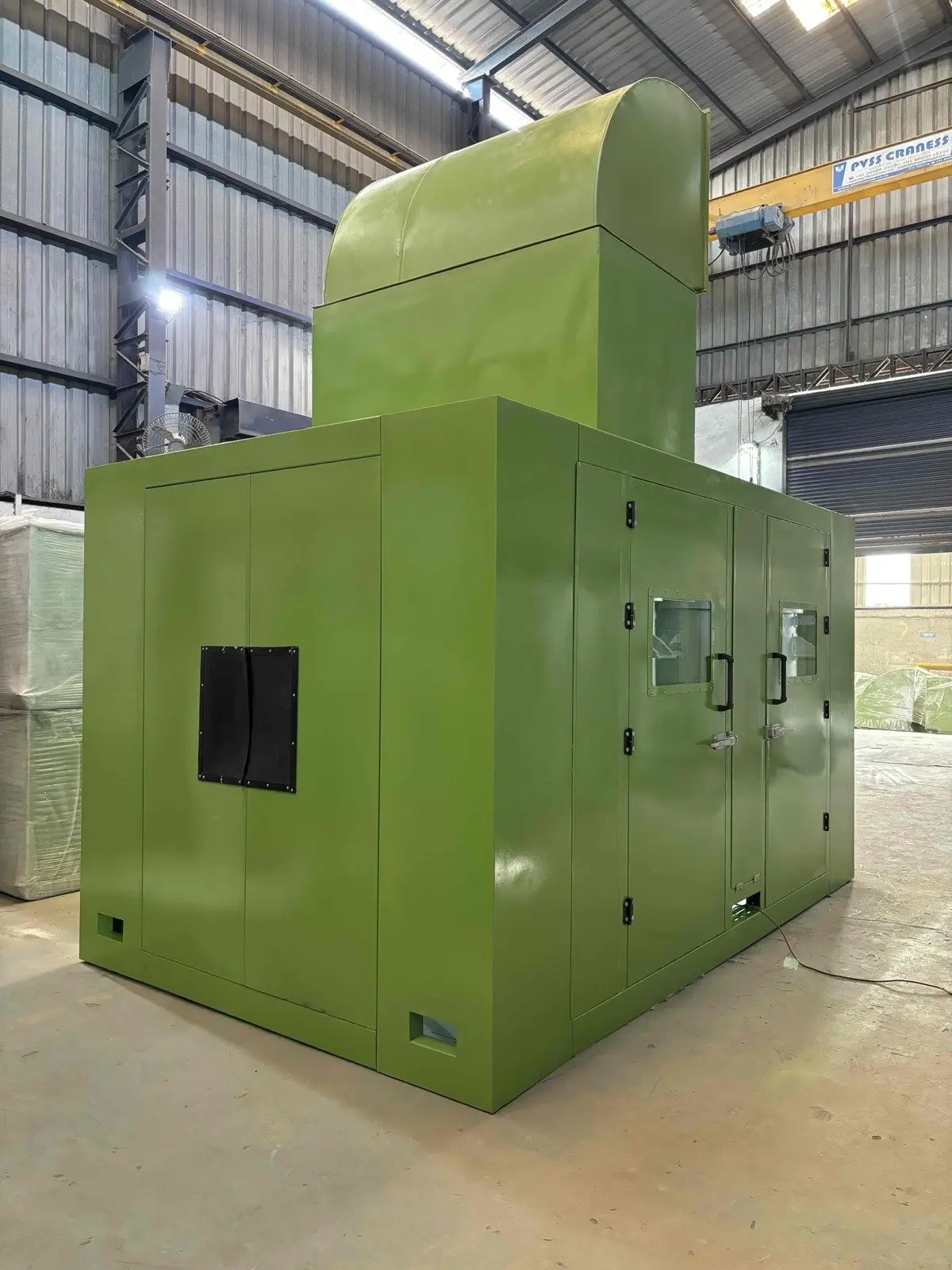
Compressors are among the most prevalent and most problematic noise sources in industrial facilities. Whether reciprocating, screw, centrifugal, or axial, compressors generate significant noise levels — typically ranging from 90 to 110 dB(A) at one meter — that routinely exceed occupational exposure limits and contribute to environmental noise complaints. Achieving compressor noise reduction below the widely recognized 85 dB(A) threshold requires a systematic engineering approach that addresses each noise generation mechanism independently. This article provides a comprehensive technical guide to understanding compressor noise and implementing effective reduction strategies.
Understanding Compressor Noise Sources
Effective compressor noise reduction begins with understanding the distinct noise generation mechanisms at play. A compressor does not produce a single type of noise — rather, it generates a complex combination of mechanical, aerodynamic, and pulsation-related noise, each requiring a different control approach.
Mechanical Noise
Mechanical noise arises from the vibration of solid components within the compressor. In reciprocating compressors, the piston-cylinder interaction, crankshaft bearings, crosshead guides, and valve impacts all generate mechanical noise. Screw compressors produce mechanical noise from rotor meshing, bearing vibration, and gear train interactions. Centrifugal compressors generate mechanical noise primarily from bearings, shaft vibration, and coupling misalignment.
Mechanical noise is typically broadband with strong tonal components at rotational frequencies, blade-pass frequencies, and their harmonics. For a reciprocating compressor running at 750 RPM, expect dominant tones at 12.5 Hz and multiples thereof, along with broadband noise from valve impacts and gas flow. For a centrifugal compressor, the blade-pass frequency (number of impeller blades multiplied by rotational speed) often produces the most prominent tonal component.
Aerodynamic Noise
Aerodynamic noise is generated by turbulent gas flow at the compressor intake and discharge, flow separation at valve ports, and turbulent boundary layer effects within the compressor casing. Intake noise is often the dominant aerodynamic noise source, particularly for centrifugal and axial compressors, and is characterized by broadband noise with tonal components at blade-pass frequency.
Discharge noise is typically attenuated by the piping system but can be significant where the discharge piping terminates or where gas is vented. High-velocity gas flow through pressure-reducing devices, bypass valves, and anti-surge valves generates intense aerodynamic noise that can exceed the compressor noise itself.
Pulsation Noise
Reciprocating compressors, and to a lesser extent screw compressors, generate pressure pulsations in the connected piping. These pulsations cause the piping to vibrate and radiate noise — often at considerable distances from the compressor itself. Pulsation-induced noise is characterized by low-frequency tonal content that is difficult to control with conventional absorption-based treatments.
Measuring Compressor Noise Correctly
Before implementing any compressor noise reduction measures, accurate measurement is essential. The compressor noise level should be measured according to relevant standards such as CAGI/Pneurop PN8NTC2, ISO 2151, or ISO 3744.
Key measurement considerations include:
- Distance: Measure at the standard reference distance (typically 1 meter from the equipment surface) and at operator positions and plant boundary locations
- Operating conditions: Measure at full load, as this represents the worst-case noise condition for most compressor types
- Background correction: Ensure background noise is at least 10 dB below the measured level; otherwise, apply corrections per ISO 3746
- Frequency analysis: Always obtain octave-band data (31.5 Hz to 8000 Hz minimum) — overall dB(A) values alone are insufficient for designing noise control treatments
- Multiple positions: Measure at multiple positions around the compressor to characterize the directivity pattern — intake, discharge, casing top, and drive-end noise levels can differ by 10 dB or more
Engineering Solutions for Compressor Noise Reduction
1. Acoustic Enclosures for Compressors
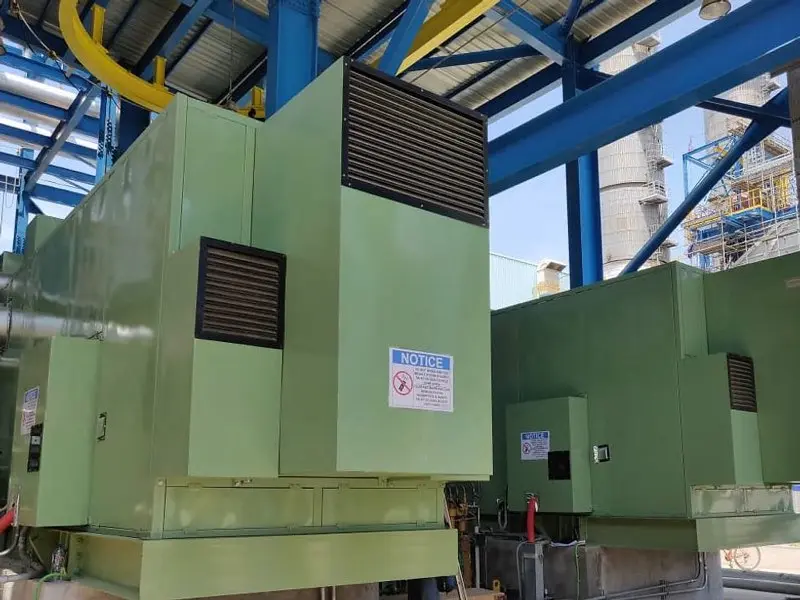
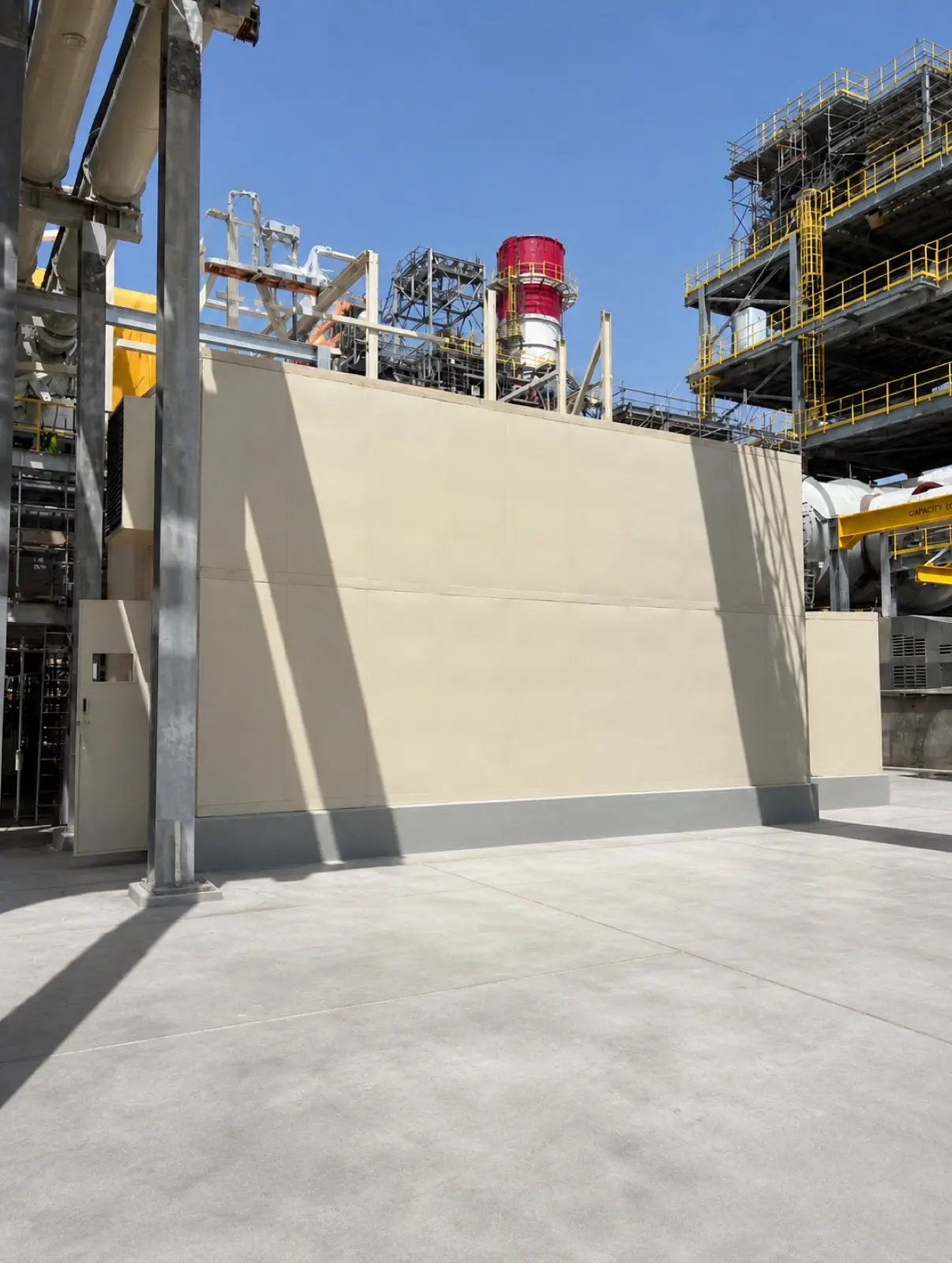
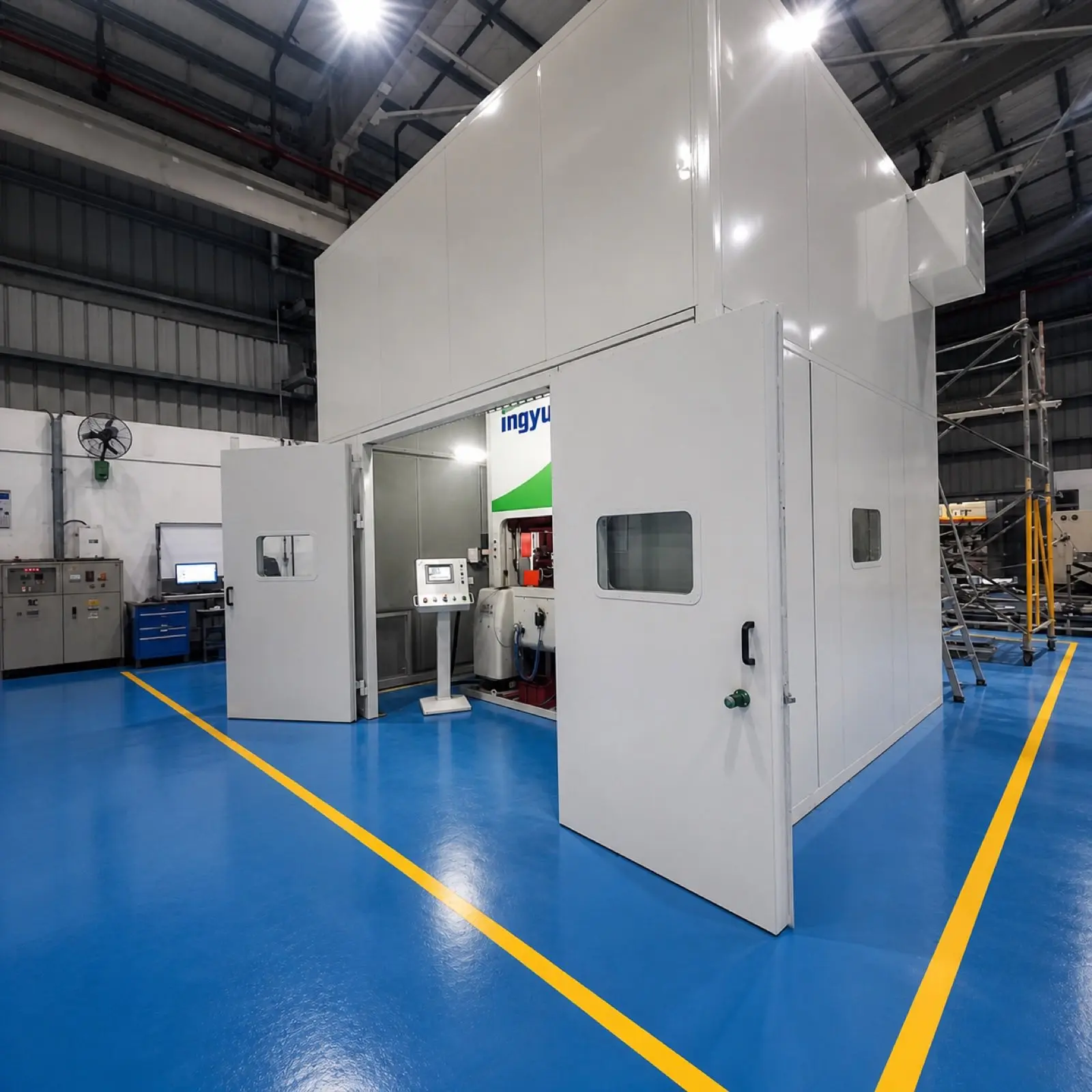
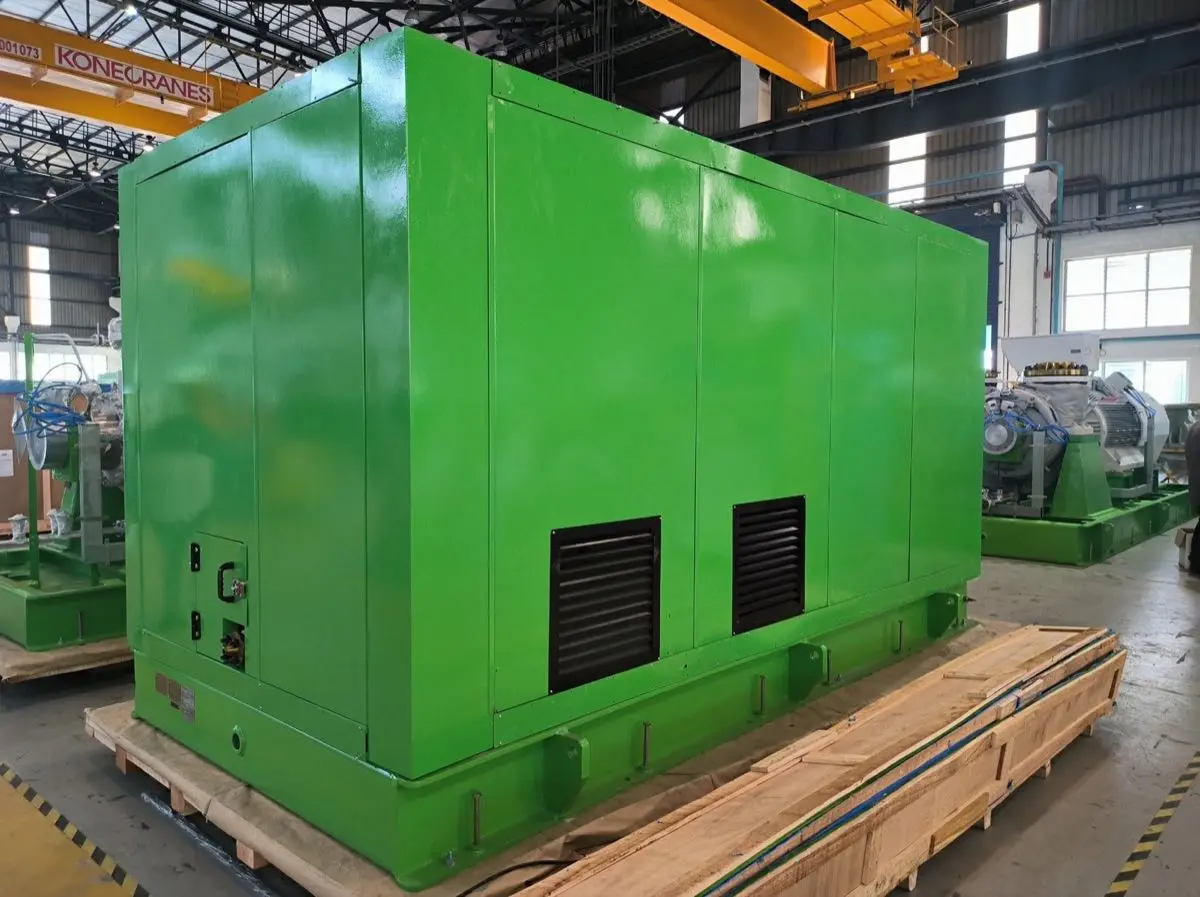
An acoustic enclosure for a compressor is the most comprehensive noise control solution, capable of achieving 20 to 35 dB(A) reduction depending on panel construction and sealing quality. The enclosure surrounds the compressor and its immediate piping with acoustically rated panels that block and absorb sound energy.
Design considerations specific to compressor enclosures include:
- Ventilation: Compressors generate significant heat. The enclosure must incorporate a ventilation system (typically forced ventilation with silenced intake and discharge) capable of maintaining acceptable operating temperatures. For a 500 kW compressor, ventilation airflow requirements can exceed 30,000 m³/h
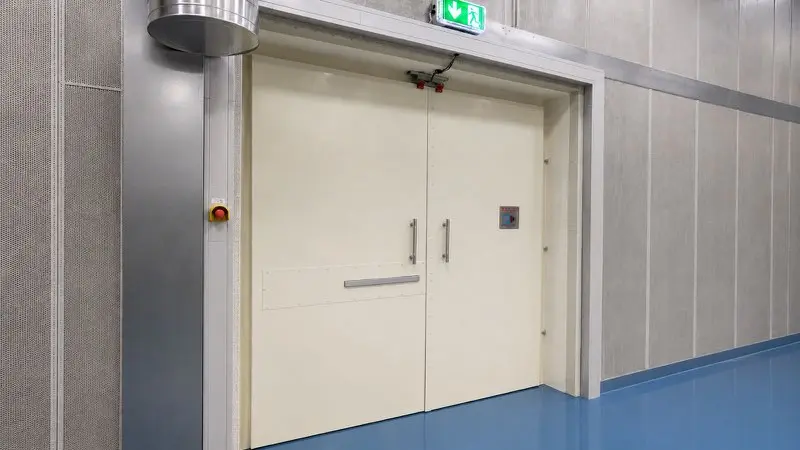
- Access: Compressors require regular maintenance — oil changes, filter replacements, valve inspections. The enclosure must provide generous access doors and removable panels that encourage proper closure after maintenance
- Vibration isolation: The enclosure must be structurally isolated from the compressor foundation to prevent vibration short-circuiting. This is achieved using resilient mounts and flexible connections at all piping and conduit penetrations
- Fire protection: For gas compressors, the enclosure must incorporate gas detection, fire suppression, and emergency ventilation provisions
2. Intake and Discharge Silencers
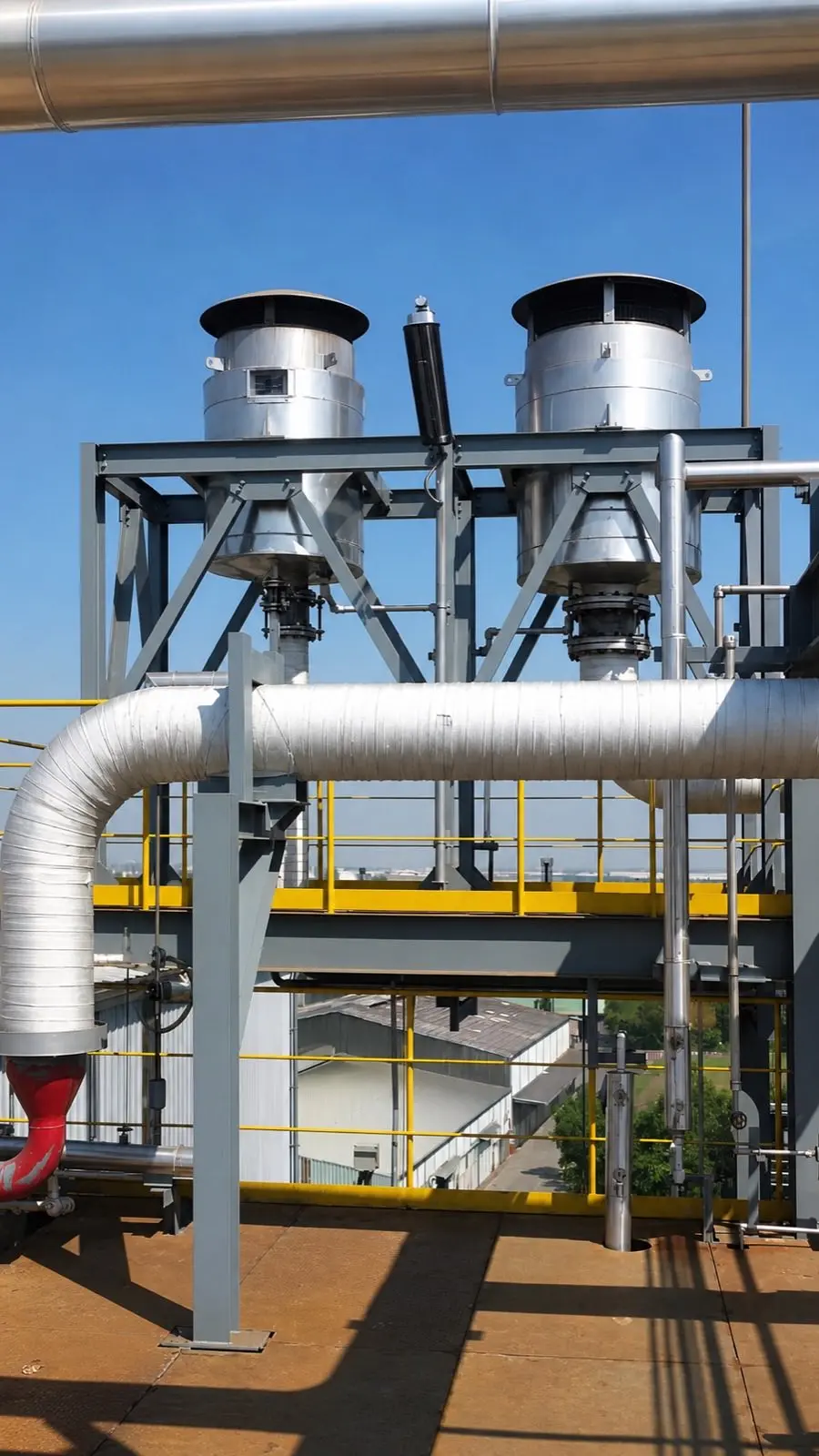
Intake silencers are particularly effective for centrifugal and screw compressors where intake noise is the dominant source. A properly designed intake silencer can reduce intake noise by 15 to 30 dB across the critical frequency range. Silencer types used for compressor applications include:
- Absorptive silencers: Effective for broadband noise reduction, using perforated steel inner tubes surrounded by acoustic-grade mineral wool. Suitable for clean gas streams
- Reactive silencers: Use tuned chambers and expansion elements to reduce tonal noise at specific frequencies. Particularly effective for pulsation-related noise from reciprocating compressors
- Combination silencers: Incorporate both absorptive and reactive elements for broadband plus tonal noise reduction
Critical performance parameters include insertion loss (dB by octave band), pressure drop (which must be minimized to avoid compressor performance degradation), and flow velocity through the silencer (typically limited to 15-25 m/s to prevent self-generated noise).
3. Removable Acoustic Blankets
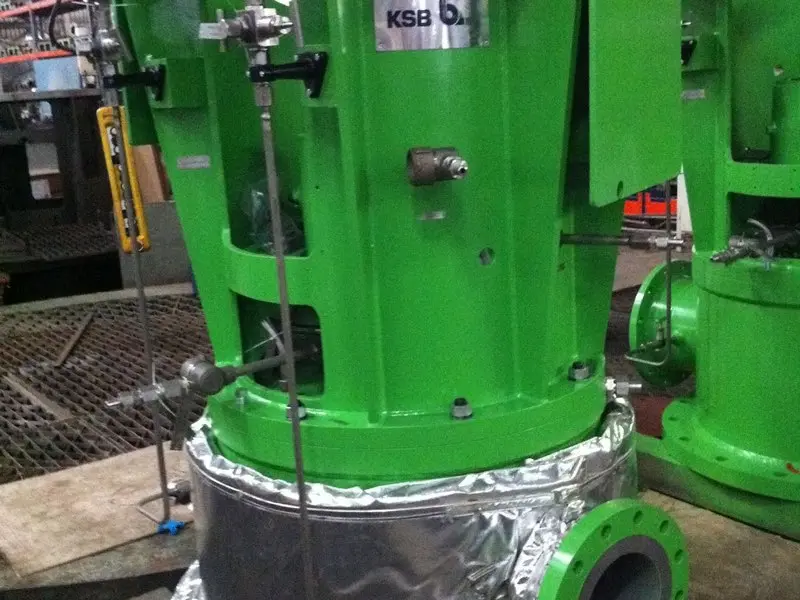
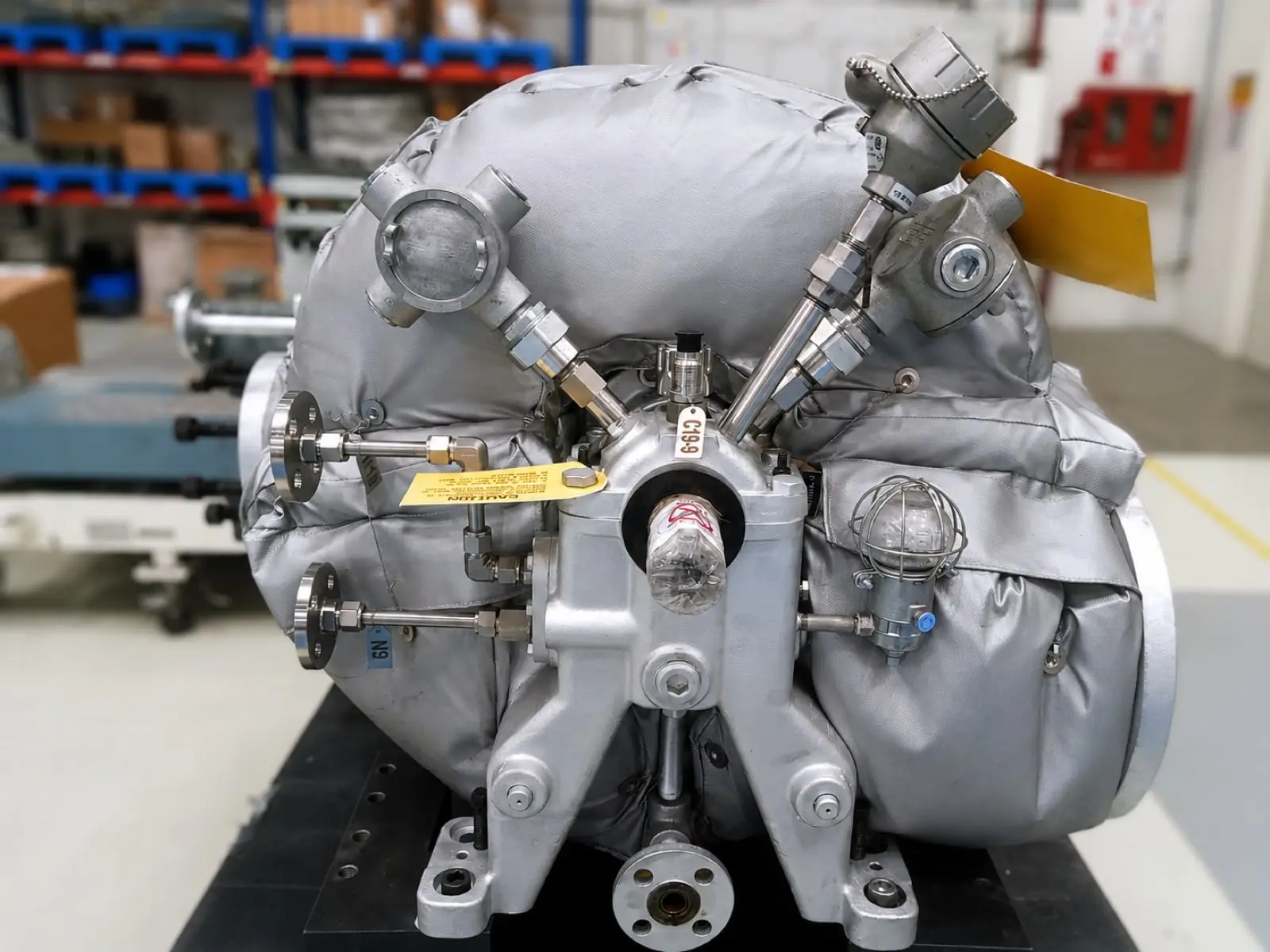
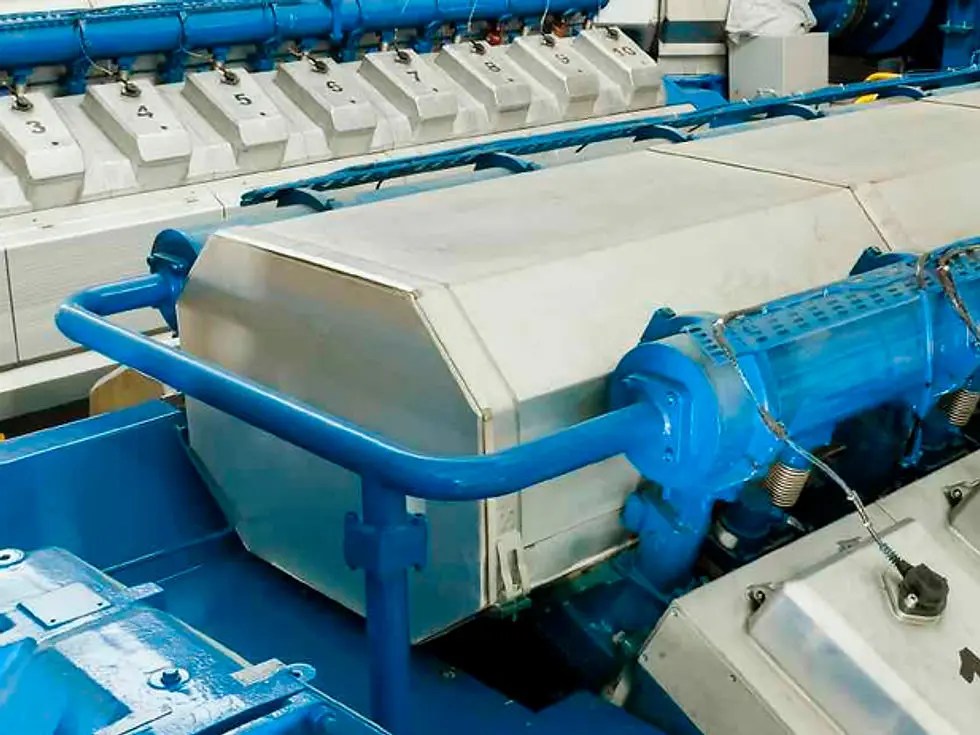
For noise radiating from compressor casings, piping, and connected equipment, removable acoustic blankets (such as ARK's NoiseLAG system) provide a practical and effective solution. Blankets are custom-fitted to the equipment geometry and secured with quick-release fasteners, providing 8 to 15 dB(A) reduction while maintaining full maintenance access.
Acoustic blankets are particularly effective for:
- Compressor casings and gearbox housings
- Interconnecting piping between compressor stages
- Discharge piping and pulsation dampeners
- Lube oil coolers and heat exchangers that radiate compressor-transmitted noise
The key advantage of removable blankets over permanent lagging for compressor applications is that they can be removed in minutes for maintenance and reinstalled without degradation — critical for compressors that require frequent inspection and service.
4. Vibration Isolation
Vibration isolation prevents compressor vibration from being transmitted to the building structure, where it would be re-radiated as noise in areas far from the compressor room. Isolation is achieved using:
- Spring mounts or elastomeric pads: Between the compressor skid and the foundation. The isolation system natural frequency should be less than one-third of the lowest compressor excitation frequency
- Inertia bases: Massive concrete blocks between the compressor and the isolation mounts, which lower the system center of gravity and improve stability
- Flexible pipe connections: At all piping connections to the compressor to prevent vibration from being transmitted into the piping system
For reciprocating compressors, dynamic analysis of the compressor-foundation system is essential to ensure that the isolation system does not amplify vibration at problematic frequencies.
Achieving the 85 dB(A) Target
The OSHA action level of 85 dB(A) (8-hour TWA) — adopted by the ACGIH as the recommended threshold limit value — is the benchmark for compressor noise reduction in modern industrial facilities. Achieving this target typically requires a combination of treatments:
| Starting Level | Treatment Combination | Expected Result | |---|---|---| | 95-100 dB(A) | Acoustic blankets + intake silencer | 80-87 dB(A) | | 100-105 dB(A) | Partial enclosure + silencers + blankets | 78-85 dB(A) | | 105-110 dB(A) | Full acoustic enclosure + silencers | 75-85 dB(A) | | >110 dB(A) | High-performance enclosure + silencers + isolation | 75-85 dB(A) |
The cost-effectiveness of each approach depends on the specific noise profile, the operating environment, and the maintenance access requirements. A detailed noise assessment with octave-band measurements is essential for selecting the optimal combination.
Conclusion
How to reduce compressor noise effectively is ultimately a question of understanding the noise sources, measuring them accurately, and applying the right combination of engineering controls. There is no single product that solves every compressor noise problem — rather, effective compressor noise reduction requires a systematic approach that addresses mechanical, aerodynamic, and pulsation noise through enclosures, silencers, blankets, and vibration isolation.
At ARK Noise Control, we have designed and delivered compressor noise control solutions for refineries, gas processing plants, chemical facilities, and power stations across India and internationally. Whether you need an acoustic enclosure for a compressor, intake silencers, removable blankets, or a comprehensive noise control package, our engineering team has the experience to deliver results that meet the 85 dB(A) target.