Industrial noise is one of the most pervasive occupational and environmental hazards in manufacturing, processing, and power generation facilities. Despite its prevalence, noise is often treated as an inevitable byproduct of industrial operations rather than a controllable engineering parameter. This article provides a comprehensive overview of industrial noise — its sources, its effects on human health and productivity, and the regulatory framework that governs noise control in Indian industry.
Sources of Industrial Noise
Industrial noise originates from a wide variety of mechanical, aerodynamic, and electromagnetic sources. Understanding the noise generation mechanism is the first step toward effective noise control.
Mechanical Noise is generated by the vibration of solid components — rotating machinery, reciprocating engines, gear trains, bearings, and structural elements. Equipment such as compressors, pumps, crushers, ball mills, and presses are common sources of mechanical noise. The noise is often broadband with tonal components at rotational frequencies and their harmonics.
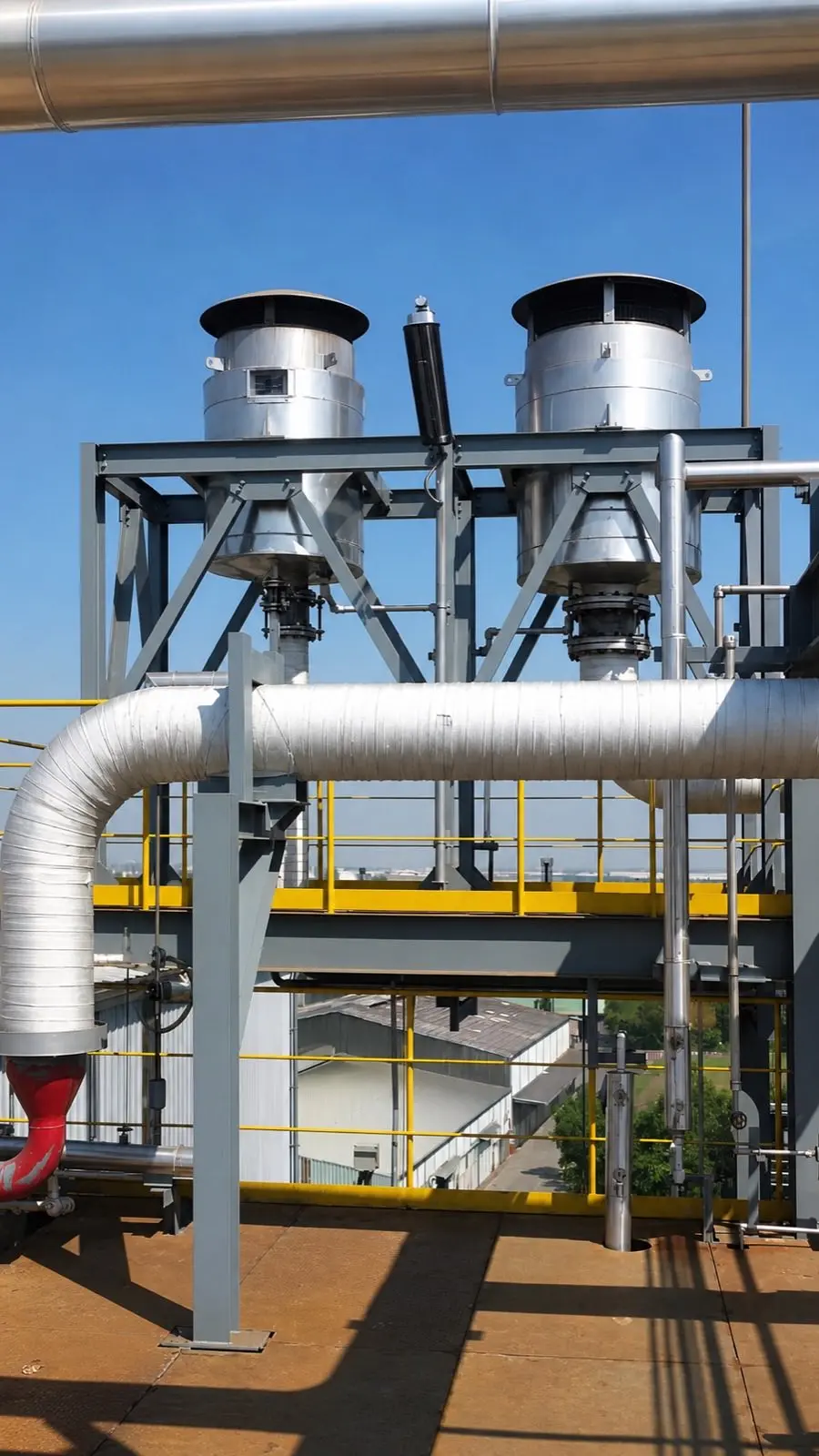
Aerodynamic Noise results from turbulent fluid flow, flow separation, and pressure fluctuations in gas and air handling systems. Steam vents, safety valve discharges, pneumatic exhausts, fans, blowers, gas turbines, and high-velocity duct systems are significant aerodynamic noise sources. This noise tends to be high-frequency and can be extremely intense — steam vent noise can exceed 130 dB(A) at 1 meter.
Electromagnetic Noise is produced by alternating magnetic forces in electrical equipment such as transformers, motors, and generators. This noise is typically tonal at the power line frequency and its harmonics (100 Hz, 200 Hz, 300 Hz for 50 Hz power systems).
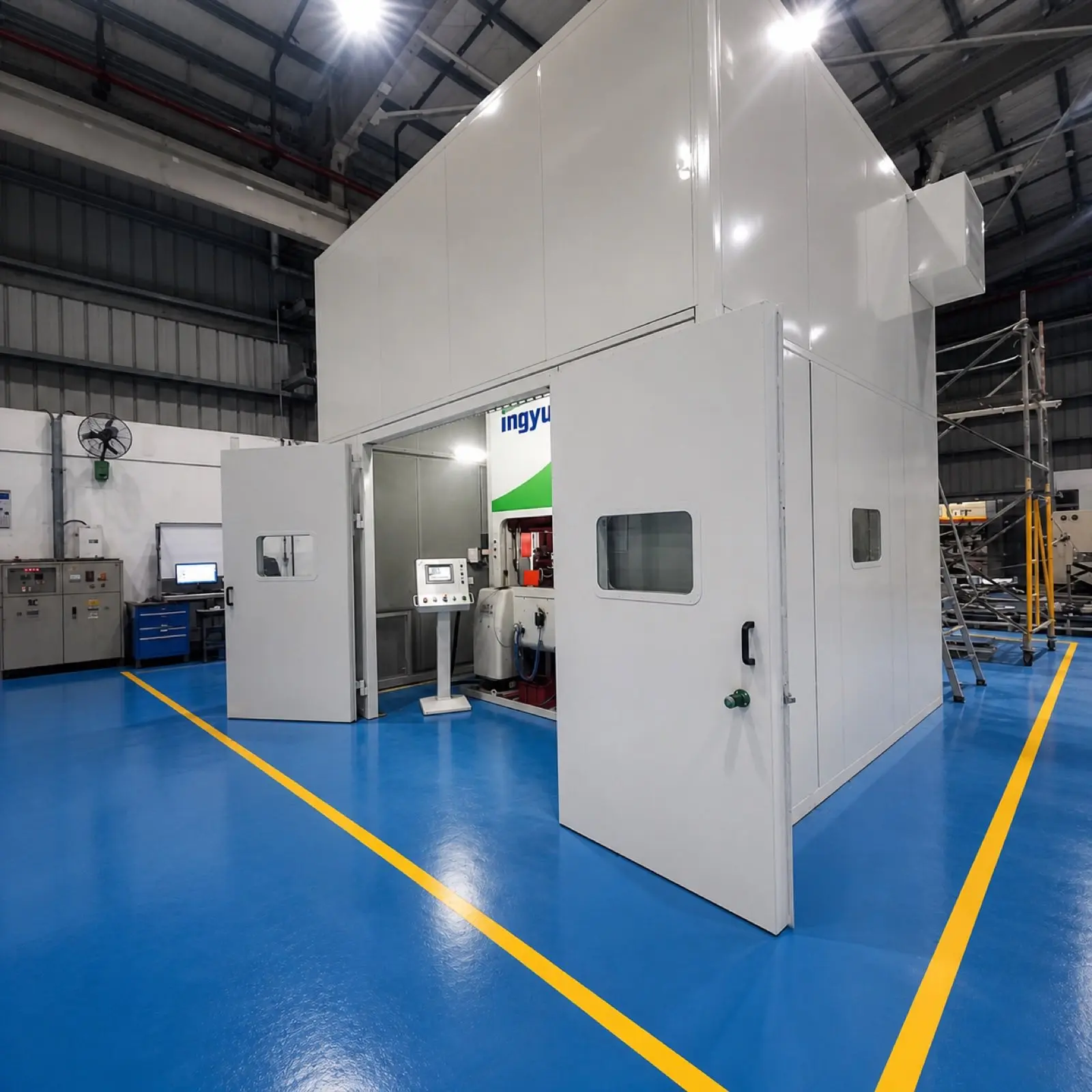
Impact Noise occurs in processes involving impacts, such as stamping, forging, hammering, riveting, and material handling. Impact noise is characterized by short-duration, high-intensity pressure pulses that are particularly hazardous to hearing.
Effects of Industrial Noise
The effects of excessive noise exposure are well-documented and fall into three categories:
Hearing Damage: Prolonged exposure to noise levels above 85 dB(A) causes noise-induced hearing loss (NIHL), a permanent and irreversible condition. NIHL typically begins with loss of sensitivity at 4000 Hz and gradually extends to lower frequencies that are critical for speech comprehension. According to the World Health Organization, occupational noise exposure is the leading preventable cause of hearing disability worldwide.
Non-Auditory Health Effects: Chronic noise exposure is associated with elevated blood pressure, increased cardiovascular risk, sleep disturbance, elevated stress hormones, and impaired cognitive function. Workers in high-noise environments report higher rates of fatigue, irritability, and reduced job satisfaction.
Productivity and Safety Impacts: Noise impairs verbal communication, reduces concentration, increases error rates, and masks auditory warning signals. Studies have shown that reducing workplace noise levels improves productivity, reduces accident rates, and lowers absenteeism.
Regulatory Framework in India
Industrial noise in India is regulated under two primary frameworks:
Occupational Noise Standards: The Factories Act 1948 and the Model Rules prescribe a permissible exposure limit (PEL) of 90 dB(A) for an 8-hour time-weighted average, with a 5 dB exchange rate. This means that for every 5 dB increase above 90 dB(A), the permissible exposure duration is halved. Many progressive Indian companies have adopted the more protective ACGIH threshold limit value of 85 dB(A) TWA with a 3 dB exchange rate, consistent with international best practice.
Environmental Noise Standards: The Central Pollution Control Board (CPCB) has established ambient noise standards under the Noise Pollution (Regulation and Control) Rules, 2000, enacted under the Environment Protection Act 1986. These standards specify area-wise limits:
- Industrial area: 75 dB(A) day / 70 dB(A) night
- Commercial area: 65 dB(A) day / 55 dB(A) night
- Residential area: 55 dB(A) day / 45 dB(A) night
- Silence zone: 50 dB(A) day / 40 dB(A) night
State Pollution Control Boards (SPCBs) enforce these standards and may impose additional conditions through consent-to-operate requirements.
The Path Forward
Effective industrial noise control requires a systematic approach: measure and map noise levels, identify dominant sources, engineer appropriate control measures, and verify results. With proper engineering, virtually any industrial noise problem can be brought within acceptable limits. The key is to treat noise control as a design parameter from the earliest stages of a project, not as an afterthought to be dealt with after commissioning.
At ARK Noise Control, we have been helping Indian industry manage noise for over 40+ years. Whether you need a noise survey to understand your current situation or a complete noise control solution for a new plant, our team of acoustic engineers has the expertise to deliver results.